The 12-Month Wedding Planning Checklist (Month by Month)
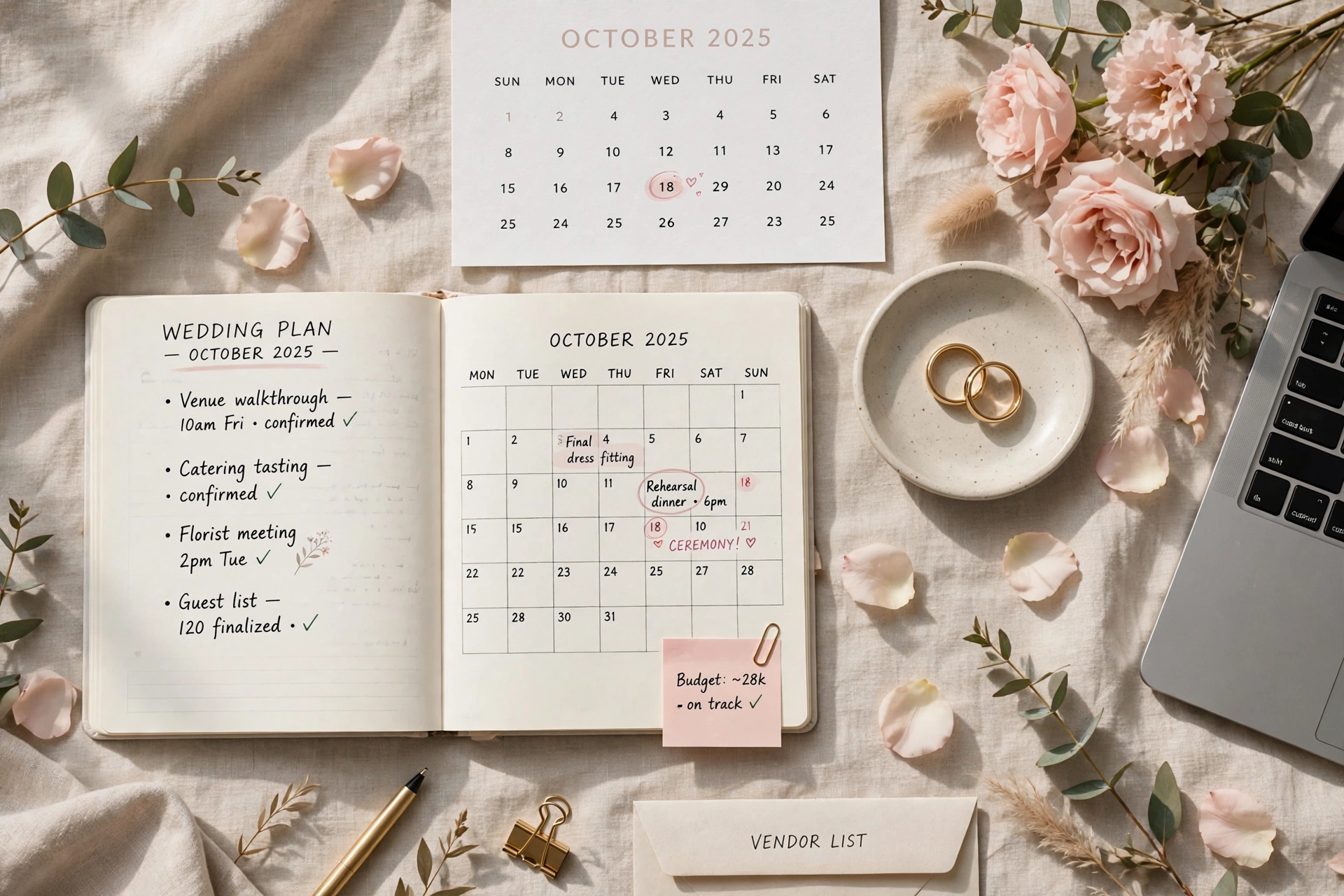
Most wedding stress is not about the size of the job — it is about not knowing what order to do it in. Book the photographer before the venue and you will re-book. Order the dress after the flowers and nobody minds at all. This checklist puts the twelve months in the right order: the things that get booked out early come first, and the things that can safely wait, wait.
Engagements average around fourteen months, so if you have more time, stretch the early months. If you have six months, skip to the fast-track notes at the end — a shorter engagement is mostly about making decisions faster, not doing more per week.
12–11 months out: the foundations
- Set the budget — the total, who is contributing, and your three priorities. Everything else hangs off this number; our budget breakdown shows the usual splits.
- Draft the guest list — a rough count drives every quote you are about to get.
- Pick a date window and book the venue — popular venues in the US, UK, Canada and Australia book 12–18 months out for peak Saturdays. Before you sign anywhere, work through our 25 questions to ask a wedding venue.
- Book the photographer and videographer — the good ones go almost as fast as venues.
- Start a shared planning folder (spreadsheets, contracts, inspiration) and an email address just for wedding admin.
10–9 months out: the big bookings
- Book catering (if not in-house), the band or DJ, and the officiant or registrar — and check your country's legal notice period for marriage, which can be weeks to months.
- Say yes to the dress — many gowns take 6–9 months to arrive and alter. Same for bridesmaid dresses.
- Book the florist and the cake maker, especially for peak-season dates.
- Reserve room blocks or share accommodation options for out-of-town guests.
8–7 months out: the look and the logistics
- Order invitations or set up your wedding website — and start the registry.
- Book transport, hair and makeup artists (trial dates go in the diary too).
- Choose suits and wedding party outfits; order the rings.
- Plan and book the honeymoon, and check passports — renewal queues can be long.
6–5 months out: details that shape the day
- Lock your colour palette and decor plan — this is when our tablescape and palette guides earn their keep.
- Order decor, favours and anything being shipped from overseas.
- Book ceremony musicians, photo booth or any extra entertainment.
- Start dress fittings; buy shoes early enough to break them in at home.
4–3 months out: paper and people
- Send invitations (earlier for destination weddings; save-the-dates should already be out).
- Finalise the ceremony with your officiant — readings, music, vows.
- Menu tasting and final cake flavours.
- Buy gifts for the wedding party and parents; plan the rehearsal dinner.
2 months out: confirm everything
- Chase RSVPs; start the seating plan with confirmed numbers.
- Confirm arrival times and final payments with every vendor, in writing.
- Hair and makeup trials; final dress fitting.
- Apply for the marriage licence if your area requires it in this window.
The final month and week
- Give final guest numbers to the venue and caterer; print place cards and signage.
- Build the day-of timeline and share it with vendors and the wedding party — who is where, at what time, with whose phone number. Our wedding day timeline gives a complete worked example for a 3 PM ceremony.
- Pack an emergency kit: needle and thread, safety pins, plasters, pain relief, tissues, phone charger.
- Delegate the day itself — a named person for vendor questions, a named person for the rings, a named person for the marriage certificate. Your only job that day is getting married.
Only have six months? Do months 12–9 in your first fortnight (budget, venue, photographer, dress — in that order), then run two checklist months per calendar month. Skip nothing in the final month; that section is the same at any engagement length.
Two things to do the week you get engaged
Before any of the above: first, insure the ring and enjoy being engaged for at least a few days — the planning will still be there next week, and couples who rush the first decisions (especially the venue and the guest list) are the ones who renegotiate them later. Second, have the money conversation and the guest-list conversation in the same week, in that order. Almost every planning argument traces back to one of those two being left vague, and both are much easier to settle before deposits make them permanent.
The one habit that keeps planning calm
Have a short weekly planning session — thirty minutes, same time each week — and a rule that wedding talk mostly lives inside it. The checklist is long, but it is finite, and nearly every couple who works through it in order says the same thing afterwards: it was never as bad as the first look suggested.
Next step: the money
See where the budget usually goes, percentage by percentage, before you book anything.
Read the budget breakdown