Wedding Decor Ideas: The Complete Guide to Styling Your Day
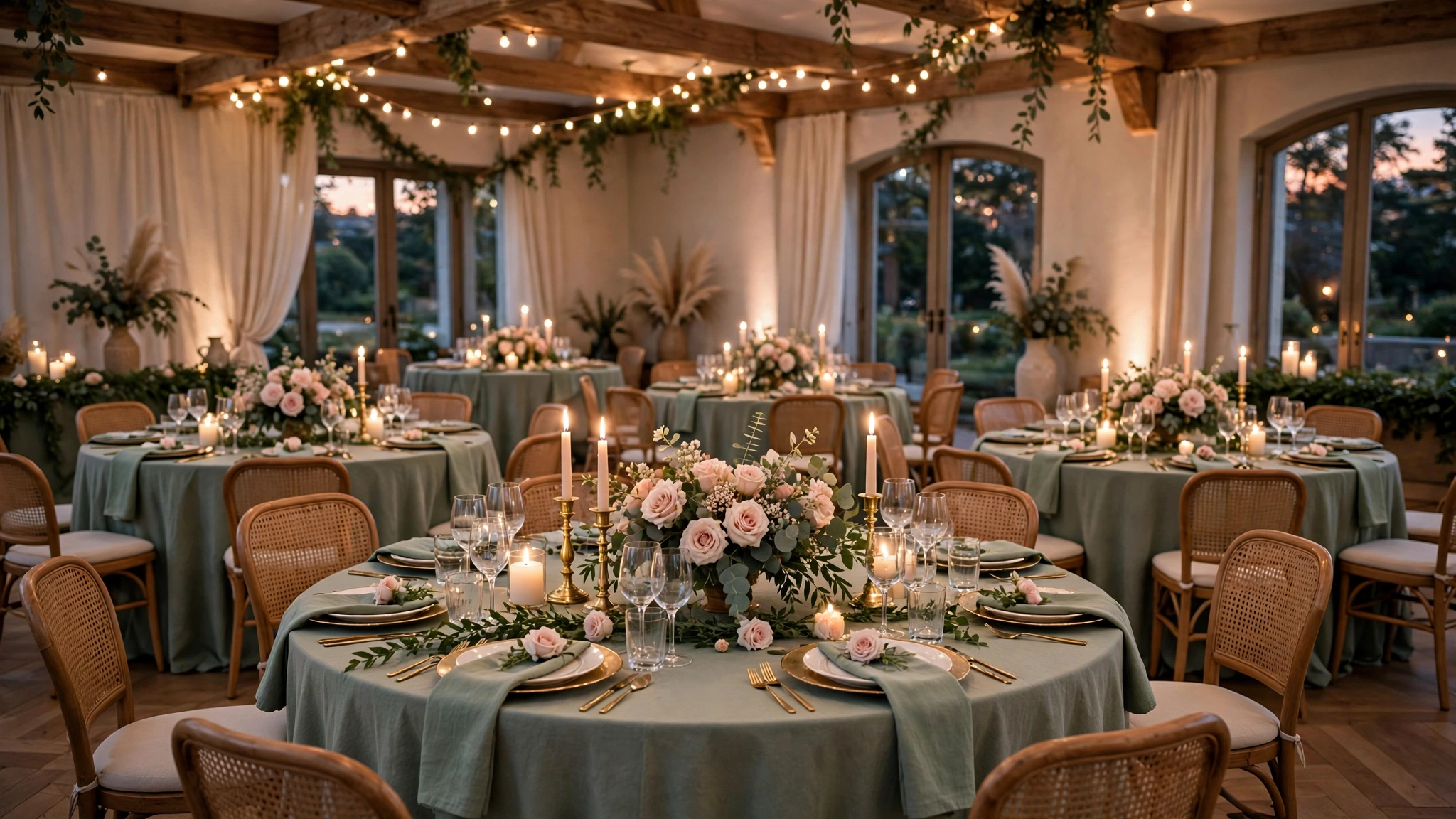
Wedding decor is not really hundreds of decisions. It is about six decisions, made in the right order, and then repeated with discipline: a palette, a ceremony backdrop, a table style, a centrepiece, a lighting plan, and a small set of details. Couples who decide those six things early end up with rooms that look designed. Couples who buy decorations one pretty item at a time end up with a garage full of lovely things that never quite agree with each other.
This guide walks through the decor of a whole wedding day in the order you should decide it, with links to our detailed guides for each layer. Whether your venue is a ballroom, a barn, a marquee, a restaurant or your own backyard, the order is the same — only the answers change.
Step 1: Choose the palette before anything else
Every decor choice gets easier once the colours are fixed, because "does it fit the palette?" replaces a hundred small arguments. A workable palette is three to five colours: a dominant neutral (ivory, white, natural linen), one or two main colours, and one metallic or dark accent. More than five and the room starts to argue with itself.
Two palettes dominate our readers' saves right now. The soft classic is sage, blush and gold — calm, garden-like, and kind to every skin tone in photographs. The moodier story of the year is plum, fig and dusty olive, the "rooted romance" palette that flatters candlelight and autumn and winter venues. Our plum & olive palette guide works that pairing thirteen ways, from flowers to favours, and shows the ratios that keep it moody rather than dark.
Whichever direction you choose, order fabric samples and carry them. Colour names mean different things to different suppliers — "sage", "blush" and "dusty blue" each cover a dozen shades — and a two-inch square of the actual linen has settled more decor disputes than any mood board.
Step 2: The ceremony — backdrop, aisle, chairs
The ceremony backdrop is the most photographed decor you will buy, because it sits behind you in nearly every picture of the vows. It does not need to be enormous. A wooden arch or pergola with two floral clusters and soft draping, a pair of tall arrangements flanking the officiant, or a simple greenery installation on a wall all frame a couple beautifully. Spend here before you spend anywhere else in the ceremony space.
Down the aisle, restraint wins. A small bunch of flowers, a lantern or a cluster of candles on every second or third chair frames the walk without crowding it, and a runner — fabric, petals, or woven rugs for a boho feel — defines the path. Chair decor is the layer most couples over-buy: guests look at the couple, not at sixty identical chair sashes. If the budget is tight, decorate only the aisle-side chairs of the first few rows and let the rest be.
One planning habit pays for itself here: design the ceremony decor to be moved. Aisle arrangements that can lift onto reception tables, an arch that can frame the cake, bouquets that drop into vases of water at the head table — decor that works twice is the oldest budget trick in weddings, and nobody in the room ever notices it happening during cocktail hour.
Step 3: Reception tables — the tablescape
Guests spend more of the wedding looking at their table than at any other decor, which is why the tablescape carries the whole reception. A tablescape is simply the full place setting treated as one design: cloth or bare wood, runner, napkins, plates and chargers, glassware, cutlery, candles, the centrepiece, and the paper details. Change one element and the whole table's mood shifts — which is good news, because it means one or two deliberate upgrades (gold-rimmed glasses, knotted linen napkins) lift a standard venue setting completely.
Our tablescape ideas guide builds eleven complete tables in the sage, blush and gold palette — from a full garden runner to a budget version built on greenery, candles and a single flower type — with the styling ratios that keep a table generous rather than cluttered. Start there if tables are your current obsession; most couples find two or three ideas in it and repeat them across every table, which is exactly what professionals do.
Step 4: Centrepieces, season by season
The centrepiece is where season matters most, because in-season flowers are cheaper, fresher and more plentiful — sometimes half the price of the same stems imported out of season. Spring offers tulips, ranunculus and blossom branches; summer brings garden roses, dahlias and wildflower meadows; autumn is dahlia season again, in deeper colours, with grasses and fruit joining the arrangements; winter leans on evergreen foliage, candles and a few luxurious blooms rather than abundance.
Height is the one real decision. Low centrepieces keep conversation flowing — guests can see each other — and photograph beautifully from above. Tall arrangements add drama and free the table surface, but they cost more and need a florist's hand to stay stable. Many couples mix: tall on some tables, low on others, same palette. Our spring centrepieces guide shows ten directions for the freshest season, from single-variety tulips to potted herbs guests take home — and the same principles (one direction per wedding, odd numbers, in-season first) apply in every season.
Step 5: Atmosphere — light, draping and the ceiling
After dark, lighting is the decor. Candlelight at several heights — tapers, tealights, lanterns, hurricane vases — makes every palette warmer and every photograph kinder, and it costs a fraction of extra flowers. If your budget allows one atmospheric splurge, make it light: string lights over a dance floor or courtyard, uplighting in your palette's softest shade, or a ceiling of draped fabric with lights woven through.
Draping deserves its reputation. Sheer fabric softens ugly ceilings, divides too-big rooms and turns a plain marquee into a romantic tent. It is also the decor item most dependent on the venue — rigging points, ceiling height and fire rules all matter — so ask about it on the venue tour, not after. On a smaller budget, borrow the effect at table scale: a draped backdrop behind the head table, or fabric swags on the ceremony arch.
Step 6: The details layer — signage, cake, favours, paper
Details are where a wedding stops looking styled and starts looking personal, and they are the cheapest layer to get right. A welcome sign that matches the invitations. Table numbers and place cards in one consistent style. The cake dressed to echo the tables — a few of the same blooms, the same ribbon colour — rather than designed in isolation. Favours that double as decor while they wait to be taken home: a styled stack of matchboxes, small candles, or seed packets in the palette.
The rule for details is the same as for everything else in this guide: pick the ones guests actually touch or photograph, do those properly, and let the rest go. A wedding with beautiful tables, warm light and three personal details will always out-style a wedding with thirty small decorations nobody remembers.
Decor on a budget: where the money should go
Flowers and decor together usually take around 8–10% of the total budget — on a $30,000 wedding, roughly $2,700, and recent research from The Knot puts average flower spend alone at about $2,800. That is the average, not a requirement. The budget version of every idea in this guide follows the same formula: greenery and candles doing the heavy lifting, one generous floral moment per table, big items hired rather than bought, and candle holders, vases and signage bought second-hand or chosen to be resold or reused at home afterwards.
Before you buy anything, read our wedding budget breakdown — it shows where decor sits inside the whole budget, the costs couples forget, and the safest places to save. And when you are ready to sequence all of these decisions into a calendar, the decor milestones are built into our 12-month planning checklist.
The professional's shortcut: choose three non-negotiables — most couples pick linens, candles and one floral moment — and let everything else be simple. Rooms look expensive when a few things are done generously, not when everything is done thinly.
A note on trends: borrow the idea, skip the stampede
Every season brings its decor headlines — right now it is flower bars where guests build their own bouquets, heavily draped and tactile styling, and small analogue touches like personalised matchbox favours. Trends are useful as a menu of ideas, not as a shopping list. Pick the one or two that genuinely fit your palette and your venue, and let the rest pass. A wedding styled around two well-chosen current ideas looks fresh; a wedding that tries to contain all of them looks like a showroom. The layers in this guide — palette, backdrop, tables, light, details — outlast every trend cycle, which is why the order matters more than the fashion.
All our decor guides
Every decor guide on Blush & Borrowed, in the order most couples read them. This page is updated as new guides are published:
- 11 Dreamy Wedding Tablescape Ideas in Sage, Blush & Gold — eleven complete reception tables, with a budget version that still glows.
- 13 Plum & Olive Wedding Colour Palette Ideas — the moody rooted-romance palette worked across flowers, tables, stationery and cake.
- Spring Wedding Centrepieces: 10 Fresh Ideas — tulips, ranunculus and blossom, for spring weddings in both hemispheres.
Frequently asked questions
What are the main types of wedding decor?
Five layers: the palette, ceremony decor (backdrop, aisle, chairs), reception tables (linens, centrepieces, settings), atmosphere (lighting, candles, draping, signage), and details (cake styling, favours, table numbers, place cards). Decide them in that order and the look stays coherent.
How much should I budget for wedding decor?
Flowers and decor together usually run about 8–10% of the total budget. You can spend much less with the greenery-and-candlelight formula above — and many couples do, without guests noticing anything but a beautiful room.
When should I decide my wedding decor?
After the venue is booked, around 6–5 months out for the palette and the big items. The venue's own colours, light and rules shape every choice, so decor decided before the venue often has to be decided twice.
How do I make decor look expensive on a small budget?
Fewer things, done generously: one centrepiece style repeated, abundant candlelight, consistent linens, hired big pieces and second-hand small ones. Light and repetition read as luxury; variety reads as clutter.
Can I reuse ceremony decor at the reception?
Yes — plan for it. Aisle arrangements move to tables, the arch frames the cake or head table, and bouquets become centrepieces. Assign the moves to a named person during cocktail hour.
Decor decided. Now the plan.
Our wedding planning guide puts every decision — budget, venue, vendors, the day itself — in the right order.
Read the planning guide